
What happens next when we dismantle the systems that made progress possible?
Date Published: January 8, 2026.
The decision to abolish Sustainability Victoria has landed quietly for some, and with a resounding thud for others.
For a change of this scale, there has been very little mainstream analysis and almost no serious interrogation of what replaces it. The limited media coverage has focused on job impacts, rather than the longer term consequences of dismantling an organisation that played a foundational role in how sustainability work actually happened in Victoria.
That silence matters, because system level sustainability work often disappears this way. Quietly, without scrutiny, long before the impacts are felt.
I am writing this from my own perspective, shaped by several years of working with Sustainability Victoria and seeing first-hand how its people, and its role in the sustainability landscape, translated ambition into delivery.
The role Sustainability Victoria plays.
Through my work as Co-Founder of Bettercup, and in the reuse space more broadly, I understand Sustainability Victoria as a connector that turns sustainability ambition into solutions that work.
The people there are deeply invested in what they do. They are collaborative, pragmatic, and hugely effective at connecting industry, councils, academia and operators. They understand that sustainability innovation rarely fits neatly into a single box. It sits between commercial interests, policy intent and operational reality.
Their role is not to generate noise about good ideas. It is to connect dots so the work actually happens.
Sustainability Victoria funded pilots that were too early or too complex for the private market alone, particularly where new practices and infrastructure required shared learning and proof of concept. Through programs, grants and investment funding, it supported Victorian businesses and community organisations to build capability, access advice, and implement changes that reduced waste and improved resource efficiency.
That funding also helped build recycling and sorting capacity, increased processing capability for recovered materials, and supported the development of reuse systems and local services. These investments created the conditions needed for long-term waste diversion and circular outcomes to succeed.
That work still matters, because sustainability does not move forward on goodwill alone. It moves forward when the right backing exists, and when systems are deliberately built to make better behaviour possible at scale..
When that backing and coordination are removed, the impact is rarely immediate. It shows up later through slower progress, fragmented efforts, and a gradual return to easier, shallower solutions.
What Sustainability Victoria enabled in practice.

Sustainability Victoria backed bettercup via the Circular Economy Business Support Fund at a critical point in our journey in October 2023.
We had already been operational since 2018 and entirely self-funded up until that point. What we needed was not further validation of the idea, but support to strengthen the systems behind it.
Scaling reuse requires investment in the parts of the business that are least visible but most essential. The funding we received went into washing infrastructure, upgrades to our Melbourne based manufacturing, and improvements to warehouse operations. These are not headline-grabbing investments. They are the foundations that determine whether a circular economy focused solution can operate reliably, efficiently and at scale.
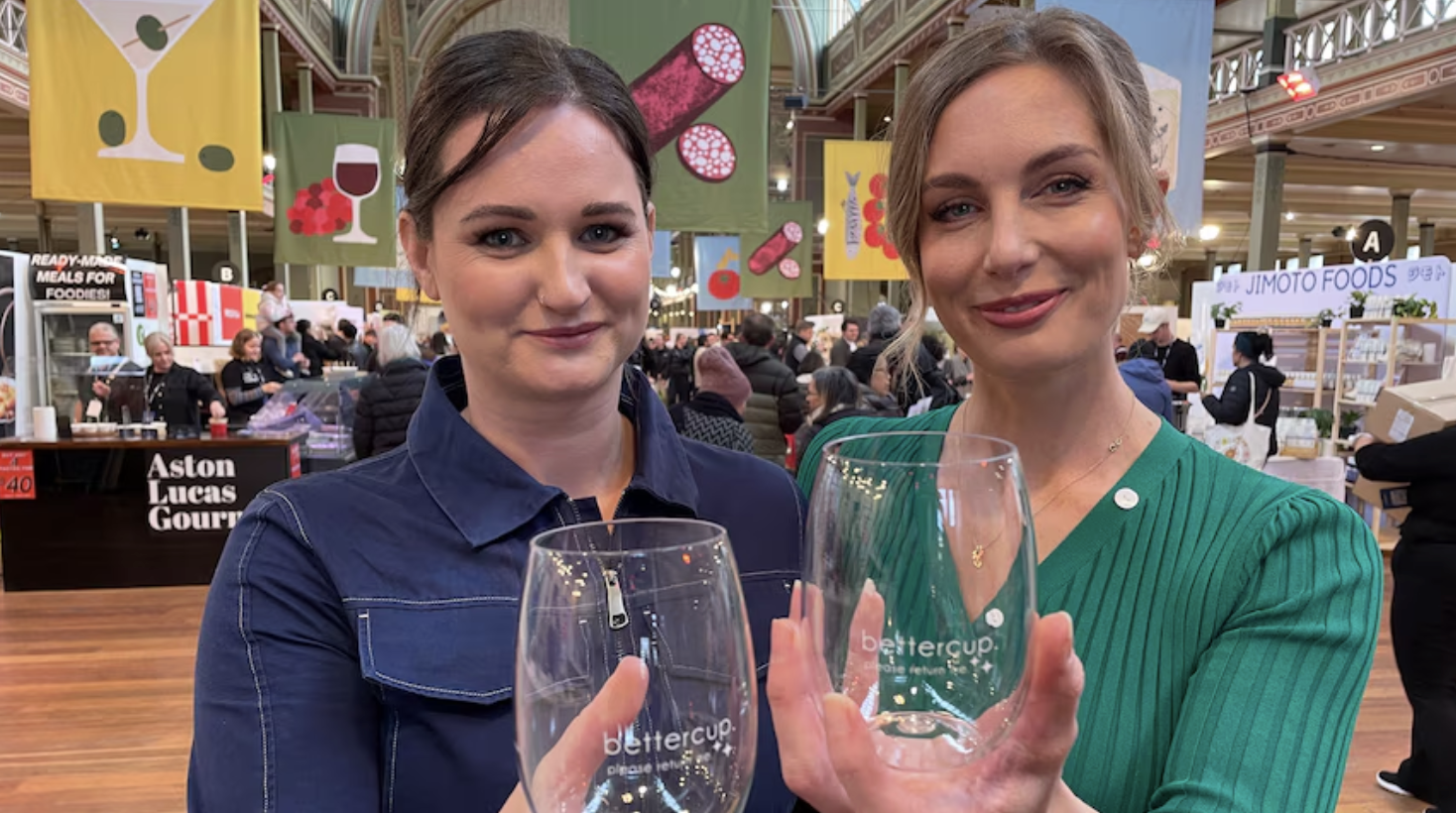
That support allowed us to refine what was already working, improve operational performance for our customers, and respond to growing demand without compromising on sustainability outcomes. It also helped connect us with organisations across industry that were exploring reuse and looking for practical ways to implement it.
This is the kind of backing that allows sustainability innovation to move beyond pilots and good intentions. Without it, many ideas stall. Others are forced to chase quick, low cost wins that undermine their long term viability. Some never make it far enough to prove their value at all.
What Sustainability Victoria enabled here was not just growth. It was resilience and the ability to build systems that hold up over time, rather than solutions that look good briefly and then fall over.
The danger of assuming someone else will pick it up.
The review recommends that Sustainability Victoria be abolished as a standalone entity and that its functions cease. The rationale provided is that its responsibilities overlap with those of the Department of Energy, Environment and Climate Action (DEECA) and other entities, including Recycling Victoria and the EPA, and that removing Sustainability Victoria would streamline sustainability policy, simplify governance, reduce administrative overheads and clarify accountability (page 83).
Separately, the review also recommends consolidating industry support activities currently delivered by DJSIR, DEECA and their portfolio entities into Invest Victoria, alongside a reduction in overall investment in this activity (page 105).
It is the combination of these two recommendations that gives me pause.
Removing Sustainability Victoria while also reducing overall investment in industry support reduces both the capability and the capital that have historically underpinned sustainability related systems development.
Sustainability Victoria actively enabled work that sat between policy, regulation and delivery. It backs pilots, infrastructure and system changes that require coordination, follow-through and patience. That work depends on dedicated capability and sustained support and advocacy over time.
Ending that work, while also reducing overall investment in industry-facing support, risks stalling progress already underway and preventing future innovation because the support required to carry them through the difficult early stages is no longer there.
The question then, is not simply where responsibilities will sit on paper. It is whether the type of work and outcomes that Sustainability Victoria was immensely good at are intended to continue at all, and if so, who is resourced to do it?
Carrying the work forward.
I’m deeply saddened by the loss of Sustainability Victoria.
When the structures that support progress are dismantled, the work doesn’t necessarily completely disappear. But it does become harder, slower and more fragmented unless people choose to carry it deliberately.
For those of us working in sustainability, and particularly in the reuse space, the response cannot be silence. It has to be the resolve to keep building, to keep connecting the dots between our organisations and industry, and to keep doing the unglamorous work that turns ambition into outcomes, even when the conditions around it become less supportive.
Sustainability has never advanced simply because all the conditions were easy or aligned. It advances because people take responsibility for carrying the work forward, often without certainty, often without recognition, and often ahead of broader systems catching up.
That is what this moment calls for.
Determination to keep the work moving forward. To be clear-eyed about what is being lost, what will be being taken on (once confirmed), and which commitments are actually made and followed through and to rebuild, deliberately and collectively the conditions for progress again.
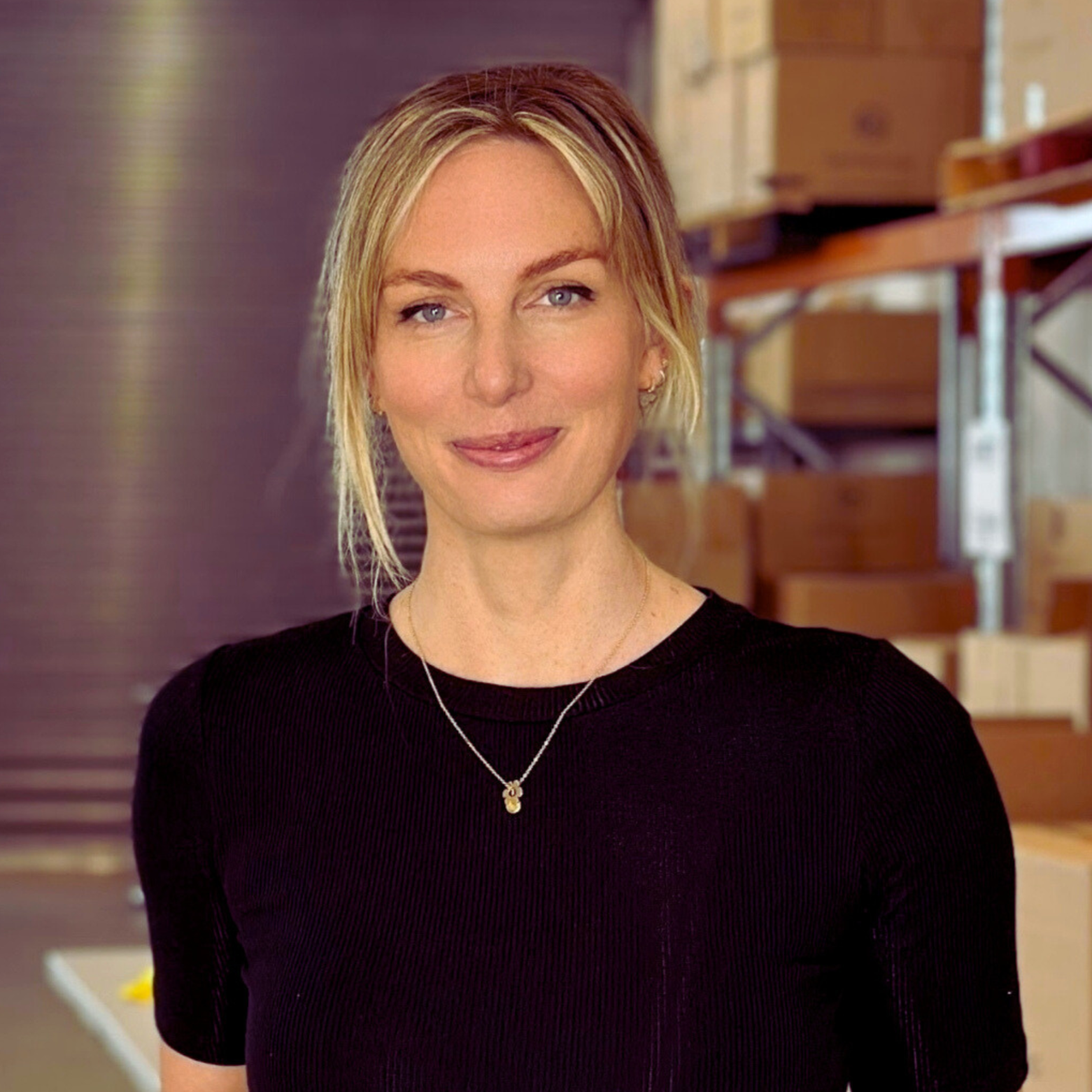
If this resonates and you are working inside an organisation, across industry, or at the edges where change is still forming, I’d love to hear from you. Feel free to get in touch if you want to explore how we might work together to keep momentum going.
Christie Kamphuis.
christie@bettercup.com.au