
The Stagnation Effect:
Why the switch to reuse keeps getting delayed, and what it actually costs.
There's a pattern we see constantly in the events and hospitality space, and I think it deserves a name.
An event organiser or venue operator knows single-use cups are wasteful, they've seen the data, they understand the environmental cost, and many of them genuinely want to do better. But when it comes time to actually make the switch, something happens. The conversation stalls, and the decision gets pushed to next quarter, next season, next year, with reasons that are always reasonable on their own: it's too complicated, the timing isn't right, we need to get through this next event first, we'll look at it properly after summer. And then nothing changes.
At Bettercup, we've started calling this the Stagnation Effect. It's what happens when organisations that already know they should transition to reuse stay stuck in single-use, not because of one big obstacle, but because of a slow build-up of small hesitations that collectively prevent action. It's not that people don't care and it's not that they're opposed to the idea. It's comfortable inertia, where the cost of staying still feels invisible because it's spread across every event, every order, every bin that gets collected and sent to landfill.
After working with over 2,000 events and venues since 2018, we think it's one of the biggest barriers to reuse scaling in Australia.

What it looks like in practice.
You've probably seen the Stagnation Effect yourself, even if you didn't have a name for it. Think about the procurement team that re-orders single-use cups on autopilot every season because the supplier relationship is already set up and the PO process is familiar, or the sustainability manager who has genuine internal support for reuse but can't get the operational team to commit to a trial date, or the event organiser who started looking into reusable cups two years ago, got a quote, and then moved on to other priorities.
We've had conversations with operators who tell us they've been "meaning to look into reuse" for three or four seasons, which amounts to three or four seasons of cups manufactured, used once, and thrown away. That's not a neutral position, it's a decision being made over and over, even if it doesn't feel like one.
The cost of staying still.
When we sit down with operators who've been in the Stagnation Effect for a year or more, the numbers are often confronting.
Picture a mid-sized festival across a weekend. Tens of thousands of single-use cups purchased for the event. Research shows a single-use coffee cup is used for an average of 13 minutes before being tossed.
At an event, where people are moving between stages and bars, it's likely even less. Over a season, that easily adds up to tens of thousands of dollars spent on products that are designed to become waste before a band has even finished their set.
Then there's the waste management cost that nobody seems to factor in. Collection, sorting, contamination, and disposal all carry a price, and that price keeps rising as landfill levies increase across Australian states. These costs usually sit in a different line item to the cup purchase, which makes them easy to overlook, but they're directly connected.
Now compare that to reuse. Yes, a reusable cup costs more per unit upfront. But our cups are designed for an estimated 500 uses. Factor in reduced waste management costs and lower ongoing procurement spend, and the question stops being "can we afford to switch?" and starts being "can we afford not to?"
Most operators who make the switch tell us they wish they'd done it sooner. Not because the transition was effortless, but because the cost of waiting was higher than they realised.

Why The Stagnation Effect Persists.
If the economics favour reuse and the environmental case is well established, the question is why the Stagnation Effect keeps happening, and from what we've seen, it comes down to how people evaluate the decision.
Almost every operator who gets stuck is looking at this as a product decision, comparing the cost of a single-use cup to the cost of a reusable cup, seeing that the reusable one costs more per unit, and hesitating. Through that lens the hesitation makes sense because the single-use cup is cheaper to buy. But a cup isn't a product in isolation, it sits inside a system, and the moment you start looking at the whole system the picture changes completely.
Single-use cups come with a procurement cost, a logistics cost, a waste collection cost, a landfill or recycling cost, a contamination cost when the wrong thing ends up in the wrong bin, and increasingly, a reputational cost when your sustainability messaging doesn't match what's actually happening on the ground. Those costs are real but they're distributed across different budgets, different teams, and different moments in time, which makes them easy to underestimate. That's the core of why the Stagnation Effect is so persistent: it thrives when people look at one part of the system at a time instead of seeing the whole thing together.
The way out is systems thinking.
Breaking out of the Stagnation Effect requires a shift in how you frame the problem, moving from "what does this cup cost?" to "what does our entire cups system cost, and what would a different system look like?"
That's systems thinking, and in practice it means looking at the full picture of procurement, logistics, use, collection, washing, reuse cycles, waste management, staff time, and customer experience, all together as one connected operation.
When operators actually do this, the conversation changes because the waste cost turns out to be higher than they thought and the operational complexity turns out to be lower than they feared.
Collection points, return incentives, washing logistics, and cup inventory are all challenges, but they're solved challenges with established processes, and the complexity lives in the unknown more than in the execution.
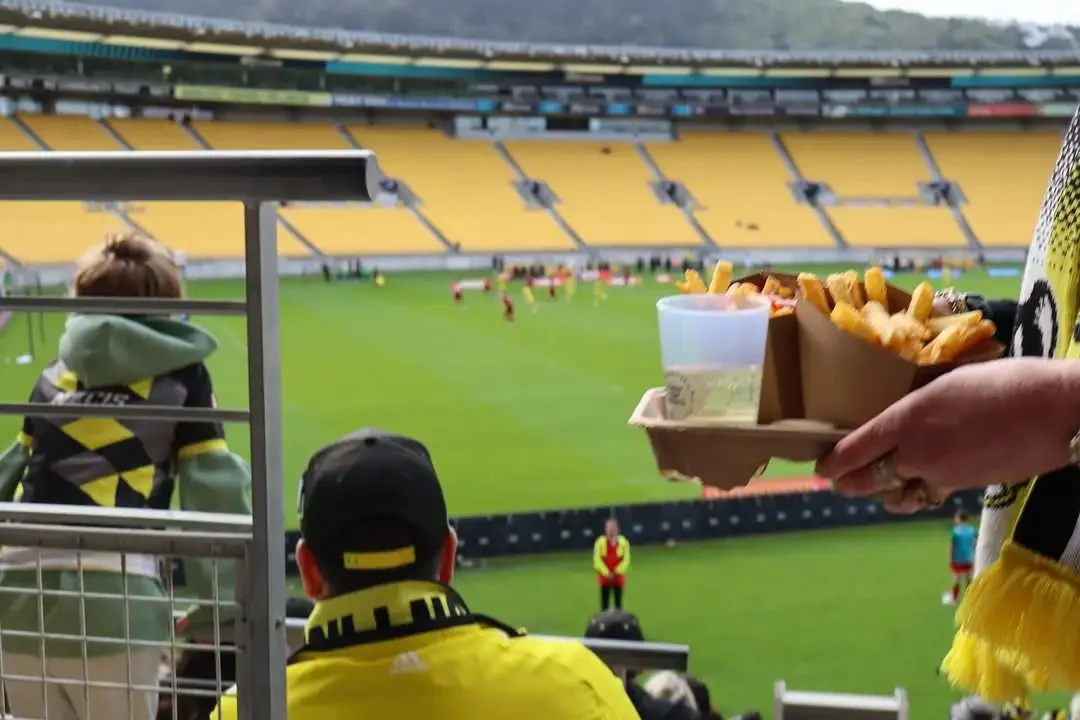
The benefits also extend well beyond the cup itself, because a good reuse system reduces bin infrastructure, simplifies waste streams, can generate revenue through cup deposits, and gives operators a sustainability story that actually holds up to scrutiny.
None of those benefits appear when you're just comparing the unit price of two cups side by side.
This is bigger than any one operator.
The Stagnation Effect isn't just playing out at individual venues and events, it's a pattern across the sector.
Australia's approach to packaging waste has historically focused on what happens after a product is discarded through recycling targets, container deposit schemes, and landfill levies.
These are important, but they operate within a system that still treats single-use as the default, and even the product stewardship schemes that were supposed to drive systemic change in packaging keep getting delayed and diluted, which is really just another version of the Stagnation Effect playing out at a policy level.
Reuse asks a fundamentally different question: not "how do we manage this waste better?" but "how do we stop creating it in the first place?".
The organisations that are leading on reuse right now aren't necessarily the biggest or the best-resourced, they're the ones that stopped evaluating reuse as a product swap and started treating it as a system redesign, looked at the full picture, made a decision, and got on with it.
What's another year of single-use actually costing you?
If you're reading this and recognising the Stagnation Effect in your own organisation, that question is worth sitting with.
Not just in dollars, though those add up, but in materials wasted, in sustainability targets that stay aspirational rather than operational, and in the growing gap between what you say your organisation values and what your cups say about it.
The Stagnation Effect is comfortable. That's precisely why it's so costly.
If your event or venue is stuck in the Stagnation Effect, we can help you work out how much single-use is really costing you and build a Reuse Plan that actually works. Get in touch to book a call with our team.
Author Christie Kamphuis, bettercup co-founder
Published 16th May, 2026

If this resonates and you are working inside an organisation, across industry, or at the edges and see the Stagnation Effect having an impact on progress, I’d love to chat. Feel free to get in touch if you want to talk further.
Christie Kamphuis.
christie@bettercup.com.au